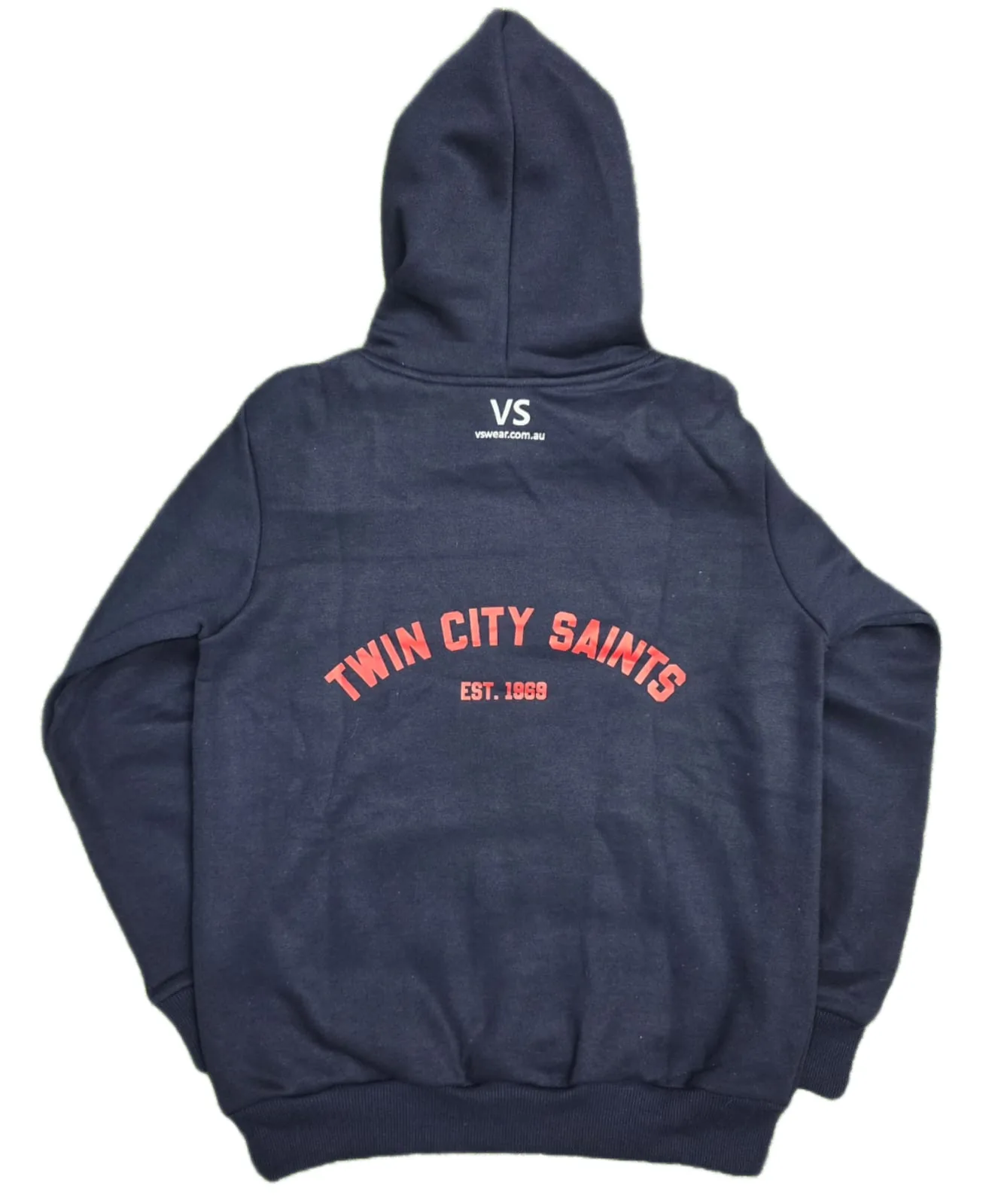
The club season, told in hoodies
Follow one club through a winter and you see every job a hoodie does. February: the committee orders pre-season gear so the squad looks like a squad at the first trial. April: round one, and the sideline is a wall of club colours over playing strips. June: the cold bites, supporters start asking where they can buy one, and the club shop wishes it had ordered more. August: finals, and suddenly everyone needs gear for the photo. October: presentation night, where the life members get something embroidered and the junior best-and-fairest gets something they will wear until it falls apart.
One supplier can carry that whole arc if the model is right: made to order, so colours match the kit; from 10 units, so the first order is not a gamble; guaranteed 3 to 4 weeks from approval, so the calendar cooperates; and everything included, so the treasurer approves it once instead of relitigating every logo. That is the model. Start your club quote and get the number in front of the committee this week.
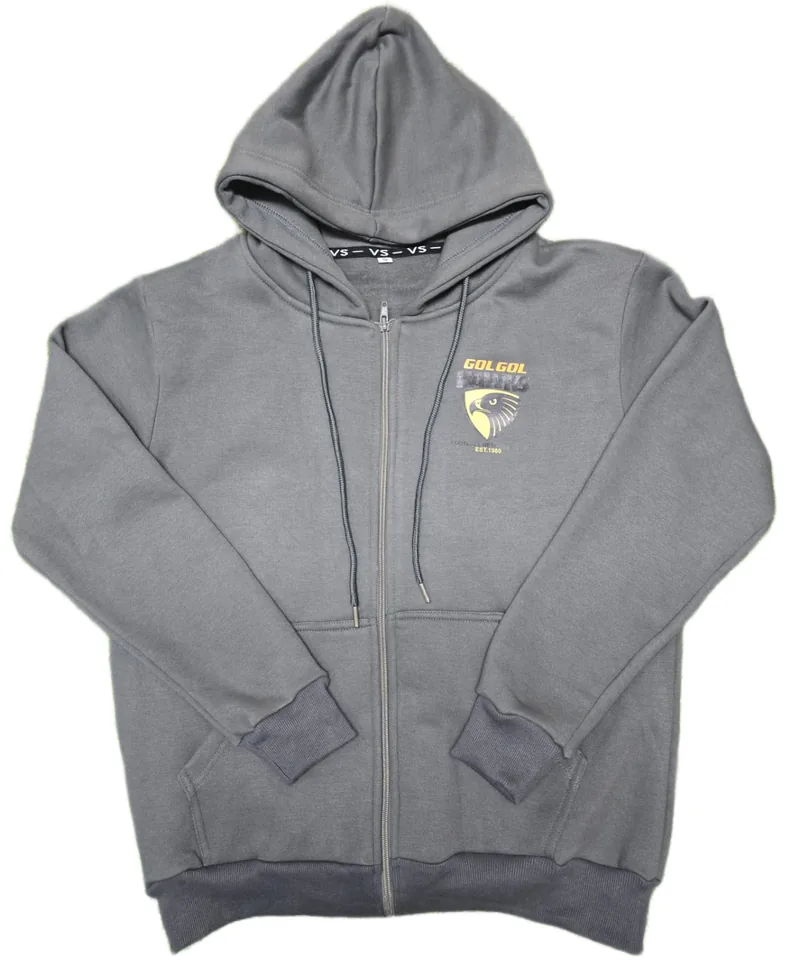
Match the kit, or why stock colours fail clubs
Club colours are not decoration; they are the institution. And they are exactly what stock-blank suppliers cannot deliver, because catalogues carry a dozen generic shades and your club's teal-and-maroon is not among them. The compromise version, nearest-shade gear with the crest printed on, always looks like what it is: merchandise adjacent to the club rather than of it.
Made-to-order manufacture works from your references instead. The fabric itself is produced in your colours, panels and trims follow the strip's geometry if you want them to, and on the sublimated line the design can quote the playing kit directly, sash, hoops, gradient and all. Committee and supporter versions can run quieter on the 380gsm heavyweight cotton with an embroidered crest. Both lines, one order, one identity. The matching also survives time: colour references stay on file, so the gear a new family buys in three seasons matches the gear on the team photo wall.
Sponsors, names and the economics clubs actually run on
A club hoodie is a small billboard, and the billboard has paying tenants. Sponsor logos fund half of community sport, which makes per-position decoration pricing poisonous for clubs: every sponsor added elsewhere is another fee, so gear designs shrink exactly where the revenue lives. Here, unlimited logos and sponsor placements are included, so the major sponsor gets the back, the juniors' sponsor gets a sleeve, and the design still costs what it costs.
Names and numbers work the same way on sublimated club gear: included, not itemised. Squads get personal gear, nobody's mum pays a surcharge for "CALLUM 7", and the spreadsheet you already keep for registrations doubles as the production list. For the full pricing logic, committee-readable, the cost guide is written to be forwarded.
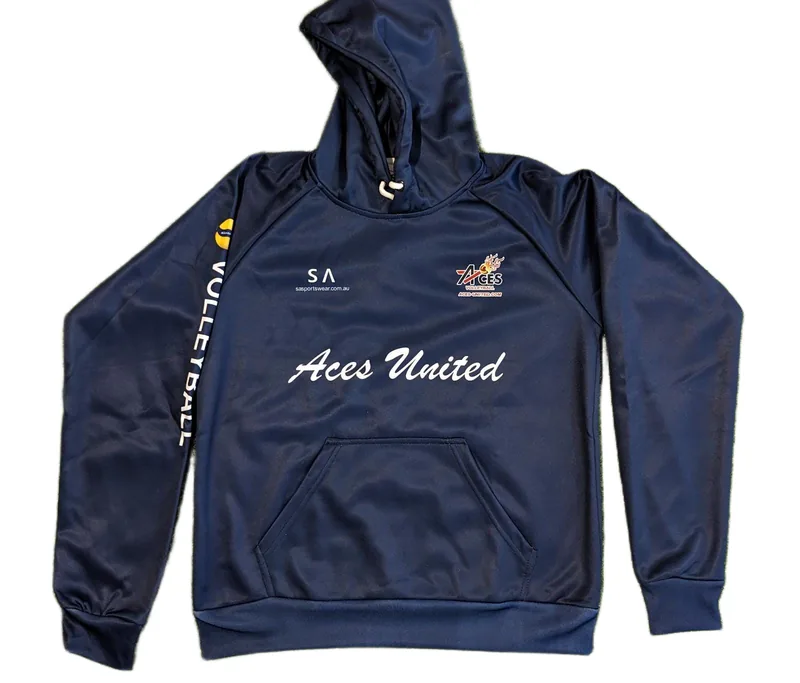
Merch: the order that pays the club back
The second order most clubs place is not for players at all. Once the gear is seen, supporters want it, and a supporter run at club-shop prices becomes a genuine revenue line, often the strongest seller a club canteen or online shop carries. The mechanics deserve their own page, and they have one: the team merch and supporter page covers pricing tiers, presentation-night gear and milestone ranges like anniversary drops. The short version for a committee skim: same artwork, plain-backed variant, healthy margin, reorder on file. New club projects appear on the VS Wear Instagram on a weekly rhythm if you want to see what other clubs' merch actually looks like.
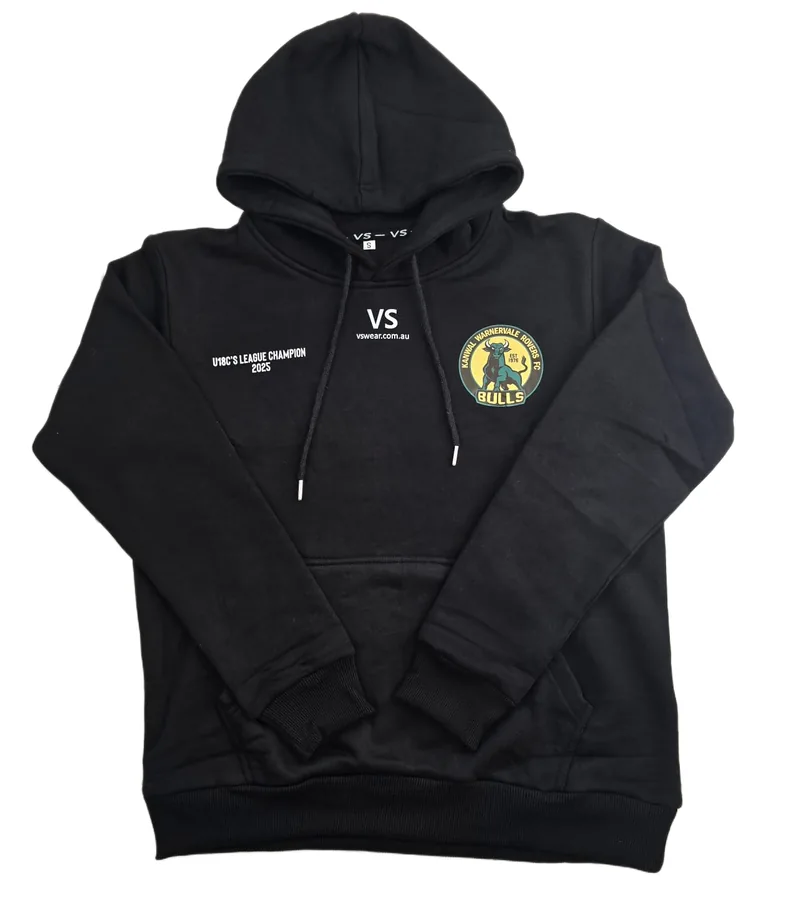
Junior clubs, growing kids and the sizing question
Junior clubs carry a sizing problem senior clubs never face: the squad grows during the season, in every direction. The practical playbook, refined across hundreds of junior orders: size for now with modest room, not for some imagined end-of-season growth spurt, because a hoodie worn like a tent in March is still a tent in August. Use the youth range properly, youth 6 up through the adult sizes in one order, so the under-9s and their teenage referees both fit on one invoice. Collect sizes at training with the gear guide we supply rather than trusting memory, because parents guess warm and kids guess cool. And keep two or three spares in the middle youth sizes, which cost little inside the run and rescue every mid-season arrival.
Winter and summer codes also split usefully. Winter clubs, footy, netball, soccer and hockey, order in the pre-season window with gear worn all season; summer clubs, cricket, softball, baseball and basketball, order in late winter for October starts, often leaning to the lighter sublimated builds. Sport-specific pages carry the detail, from soccer through the other codes on the audiences hub, each with its own examples and calendar notes.
Run the order like a good committee
The clubs that find this easy all run the same play. One nominated organiser, usually the team manager or merch secretary, owns the supplier conversation. Sizes and names are collected in a single shared sheet while the design is in revision, not after approval. The order includes a few spare units in common adult sizes for the inevitable latecomer. And approval happens on a deadline the committee sets itself, because our production clock, a guaranteed 3 to 4 weeks, only starts when they click approve. Clubs by sport have their own pages with sport-specific detail, starting with soccer clubs, and the ordering timeline guide maps the whole season calendar.
From 10 units through CustomHoodie, quoted within 2 hours during business hours, designed free with unlimited revisions after ordering, backed by the 100% remake guarantee. Hundreds of businesses, clubs and schools trust us with their hoodies, and clubs are where that number started. Get your club's quote or call 1800 845 056 and talk to someone who knows what a wet Tuesday training session does to cheap fleece. Season gear is a small decision that gets seen forty times a winter; clubs that make it well once tend to stop shopping around, which is exactly the outcome both sides want.