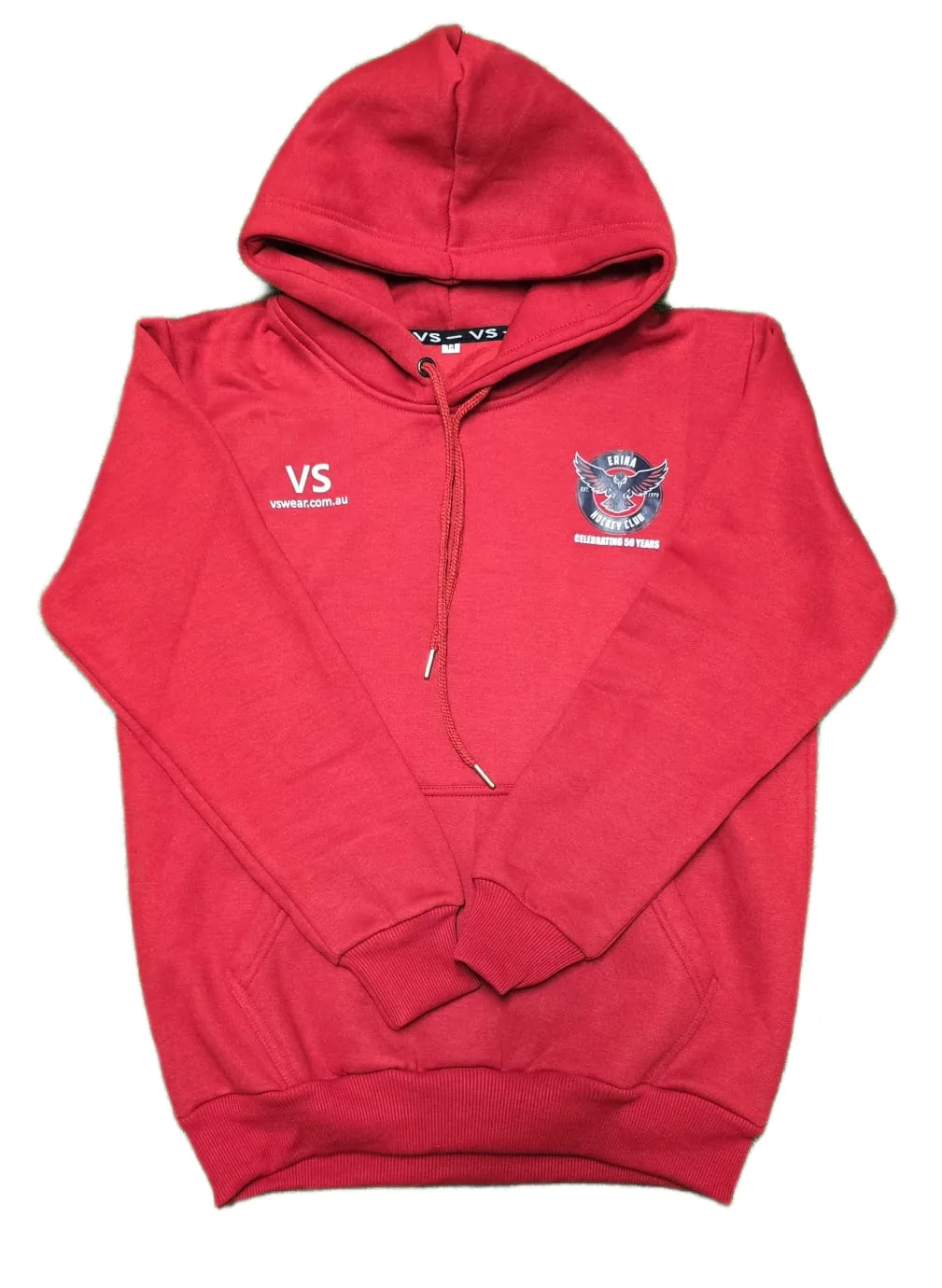
Turf nights are the sales pitch
Hockey modernised itself onto synthetic turf and inherited a climate problem: the season runs through winter, the surface is watered, the fixtures run into the night under lights, and the wind across an open turf makes footy ovals feel sheltered. Every hockey family knows the specific cold of a 9pm Tuesday training pickup, and every hockey club eventually orders the gear that answers it. The Erina Hockey Club hoodies across this page, red and navy, multiple colourways, reordered across seasons, are what the answer looks like when a club commits properly.
Hockey's club structure sweetens the fit: family-anchored, minkey-to-masters, colour traditions held for generations, and committees that run gear as a season ritual rather than a one-off. If that describes your club, start the hockey quote and let the turf chill close the internal debate for you.
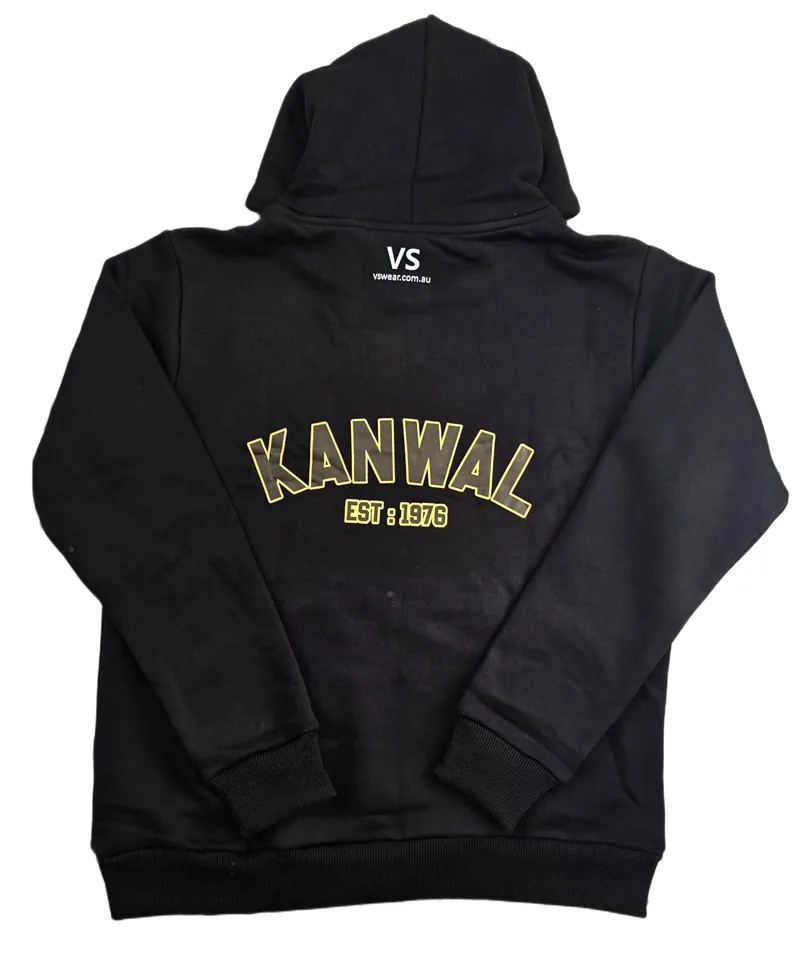
Colour traditions, honoured at fabric level
Hockey clubs hold their colours tightly, often across a century of district history, and gear that approximates them insults the tradition it borrows. Made-to-order manufacture honours it instead: the fabric itself is produced in your colours against references or existing kit, the Erina red on this page being exactly that process at work, threads and prints matched to suit, everything locked at your proof. The embroidered crest on 380gsm heavyweight cotton remains hockey's signature look, warm enough for turf nights, dignified enough for the clubhouse wall photos, while design-led squads take the sublimated line where strip patterns and names carry across the garment.
Colour archives then do their quiet work: the references stay on file, so the under-11s gear bought in your club's centenary year matches the masters gear bought three seasons later, and "club navy" stops drifting supplier to supplier forever.
The bench, the balcony and the boot room
Hockey club life happens in three cold places, and the order should cover all of them. The bench: playing squads in pullovers, coaches and managers in zips that layer over club polos through double-header Saturdays, names included on sublimated builds. The balcony: the supporter run, pre-sold through the club per the merch playbook, where turf-side parents convert faster than any code once June arrives. And the boot room: the committee and volunteer tier, embroidered pieces for the people who mark lines, run canteens and umpire the games nobody else will, gear that says thank you with more permanence than the AGM minutes.
One design serves all three, pooled into one order and one band, which is the arithmetic that turns a team-by-team scramble into a club program.
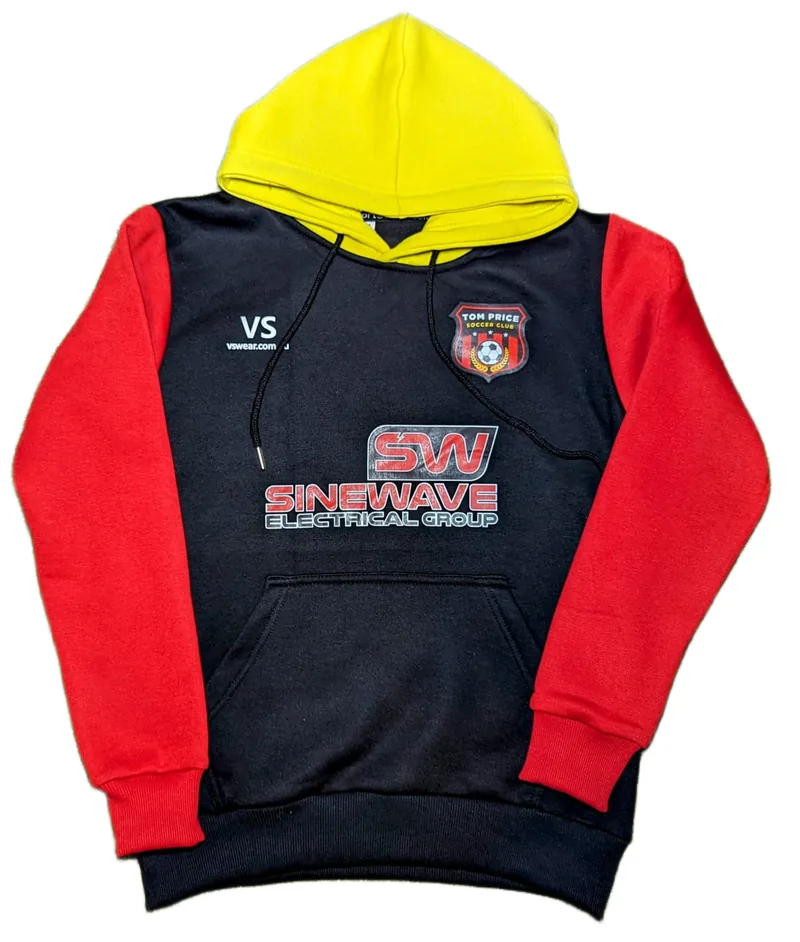
Minkey to masters, one run
Hockey's age span is the widest in Australian club sport, five-year-old minkey players to masters sides who remember grass, and often one committee kits the lot. The machinery matches: youth 6 through adult 5XL in a single run, mixed fits for the teenage squads, the measurement-based sizing method circulated through team managers, spreads sanity-checked against comparable club orders, and spares in middle sizes for the mid-season arrivals winter always delivers. Names on junior gear solve the identical-bag chaos of every turf shed in the country.
Association work scales the same pattern: representative squads at selection time, multi-club runs as colourways from one base design, umpire and official gear where associations kit their own, all pooled for banding, all archived for the annual reorder rhythm.
Season logistics, hockey edition
The calendar plays like every winter code with one hockey twist: grading rounds settle squads slightly later, so the order window compresses and approval speed matters more. The counters are structural: quotes within 2 hours during business hours, proofs 1 to 2 business days after you order, unlimited revisions that still move quickly when one committee member owns the signature, and the guaranteed 3 to 4 weeks of production from approval that makes round-one delivery a plan rather than a hope. Mid-season demand, the supporter wave, the rep squad, the new family, runs from the archive without redesign, and the timeline guide maps the full year for the committee's planning night.
Commercials never move: all-inclusive pricing with no setup, artwork or digitising fees, 50% deposit, tracked delivery, 100% remake guarantee against your approved files. New club projects post to the VS Wear Instagram every single week, turf codes well represented.
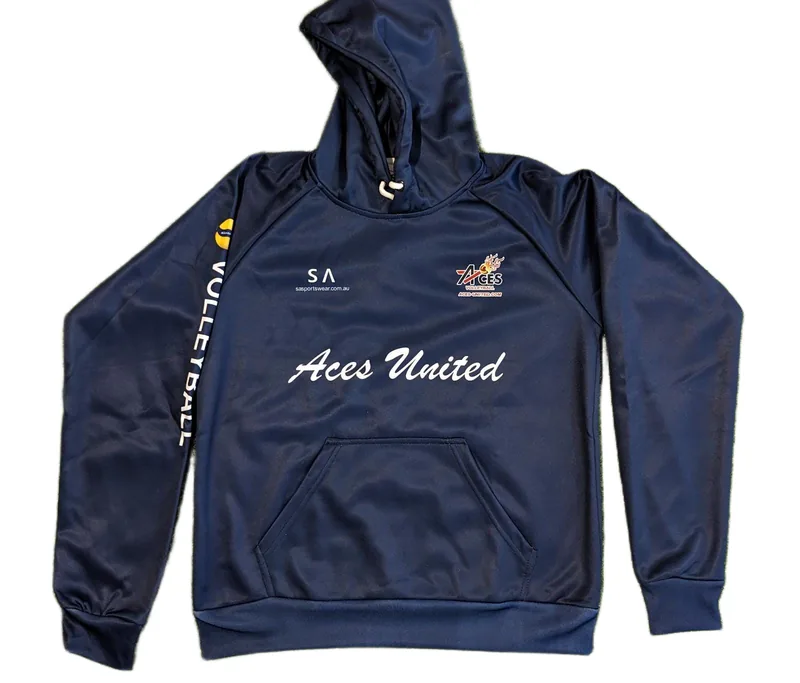
Keepers, umpires and hockey's special cases
Hockey carries a few gear cases other codes lack, worth naming so the order covers them. Goalkeepers live in their own thermal economy, fully padded during play, freezing the instant the gear comes off, and a keeper-sized hoodie in the spares pool, cut generously per the oversized guidance, is the kindest line on any club order. Umpires, hockey's chronically under-thanked officials, warrant the distinct-colourway tier every code should run: UMPIRE across the back, warmth for the least sheltered job on the turf, funded from the pooled run where it costs least. And the dual-code families hockey collects, half the club also playing summer cricket or touch, mean the gear gets year-round wear that lighter codes never deliver, improving the cost-per-wear maths the treasurer cares about.
None of these cases needs a separate order; they need a committee that thinks of them at quote time, which is precisely why this paragraph exists.
Push back to start
Hockey rewards clubs that move early, and so does gear: gather grading lists, colour references and last year's sizing gripes, send the quote request, and have the number at the next committee meeting. The proof loop absorbs the debate, the guaranteed window absorbs the calendar, and by round one the bench, balcony and boot room all match. Hundreds of Australian clubs, schools and businesses order their hoodies here; hockey's early adopters, Erina among them, showed the code the way. 1800 845 056 reaches people who know exactly how cold watered turf gets at nine on a Tuesday night.