The promo industry's open secret
Everyone in marketing knows the fate of most promotional products, and orders them anyway, because the unit price photographs well in a budget line. The bin does not appear in the spreadsheet. Run the honest metric instead, cost per hour of brand exposure, and the table flips: the trinket dies in a drawer within a week, while a hoodie worth keeping delivers years of wears, each one in front of the recipient's actual social world, the gym, the school gate, the Saturday market, audiences money struggles to buy directly.
That is the entire thesis of promotional hoodies done properly: spend more per unit on fewer, better items, aimed at people worth impressing, and let longevity do the arithmetic. The rest of this page is the how. Price the better promo and compare it to the trinket line honestly.
The keep test, and how to pass it
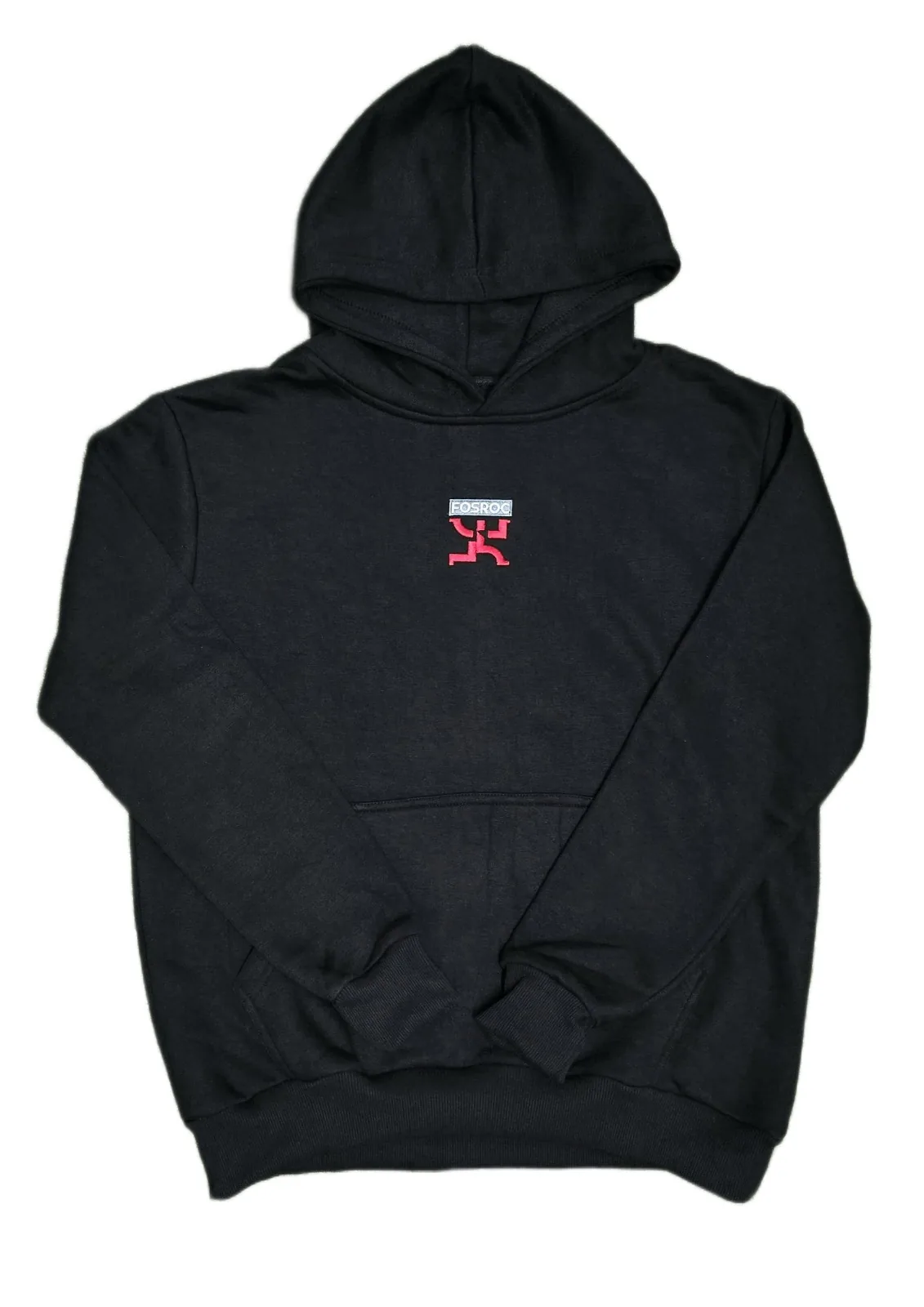
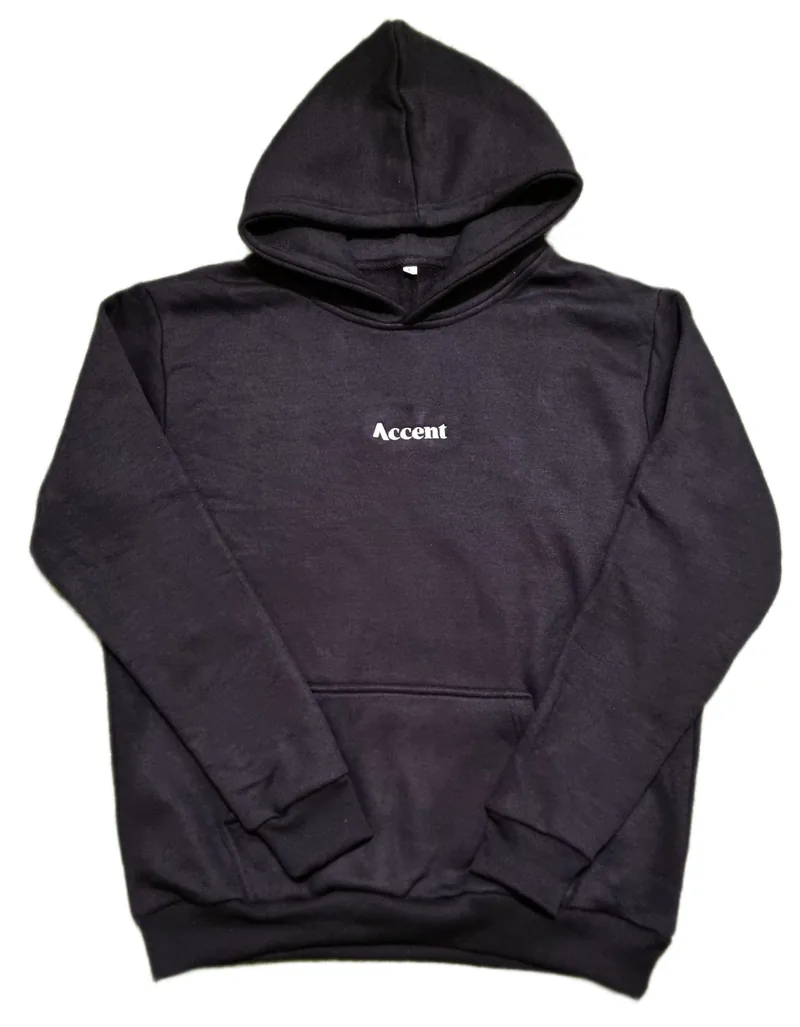
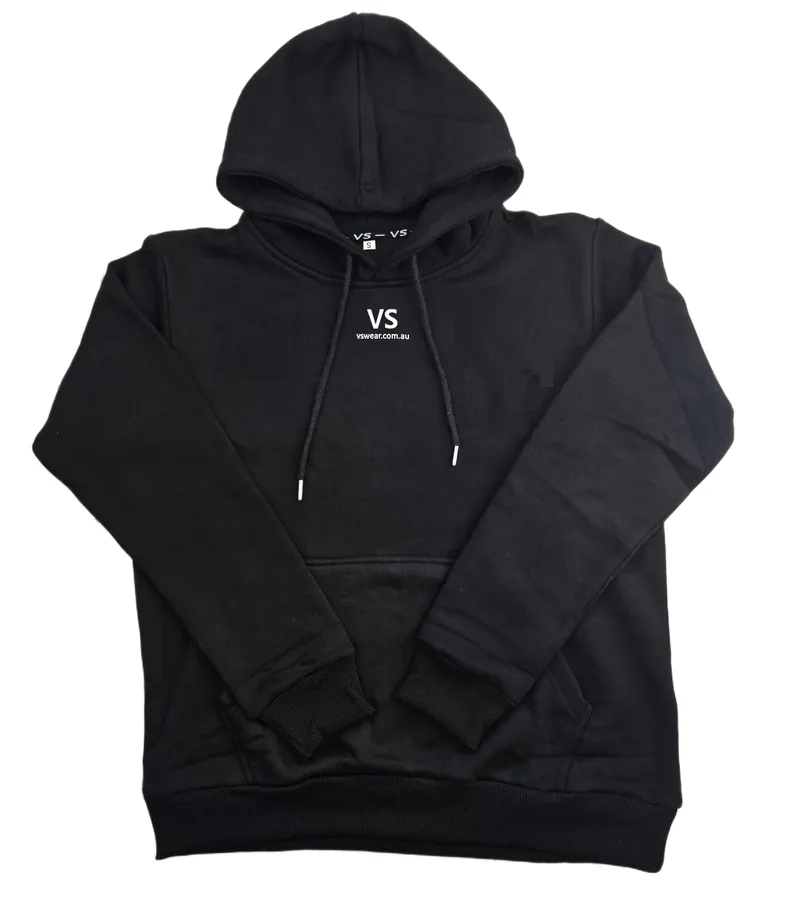
A promotional item earns its cost only if it survives the first cull, the moment a recipient decides silently whether this enters their life or their landfill. Hoodies pass or fail on three checks recipients run in seconds. Weight: a thin fleece announces its budget instantly, while the published heft of a 380gsm heavyweight announces the opposite. Branding restraint: a billboard-sized logo turns a garment into a sandwich board nobody wears, while a tasteful embroidered mark or an integrated sublimated design gets worn to brunch. And fit reality: gear offered in real size ranges, youth 6 to adult 5XL with the oversized cut available, respects bodies enough to be kept.
Design for the keep test explicitly: brand presence calibrated to clothing, not signage, colours matched to your actual brand in the fabric itself, and decoration that survives washing, embroidery or dyed-in sublimation, never the flaky transfer that turns your logo into an ageing metaphor.
Three campaign shapes that work
The VIP tier, 10 to 25 units. Client gifts, partner thank-yous, influencer seeding: small runs where per-unit cost matters less than per-recipient impression. Names included on sublimated builds turn inventory into gesture; premium embroidered cotton does the talking. This tier alone clears our minimum, which is why the minimum sits at ten.
The launch run, 50 to 100. Conference gear, product launches, anniversary campaigns: enough volume for the middle pricing bands, uniform enough to photograph as a movement. Mixed pullover and zip styles from one artwork cover staff and giveaway audiences in one order.
The public program, 100 plus. Staff-and-customer ranges, campaign merch, sponsorship activations: the tier where the bands work hardest and where the giveaway-versus-sell decision matters most. Selling at cost filters for genuine fans who wear the gear hardest, the promo paradox worth exploiting deliberately.
Sponsorship: promo's smartest disguise
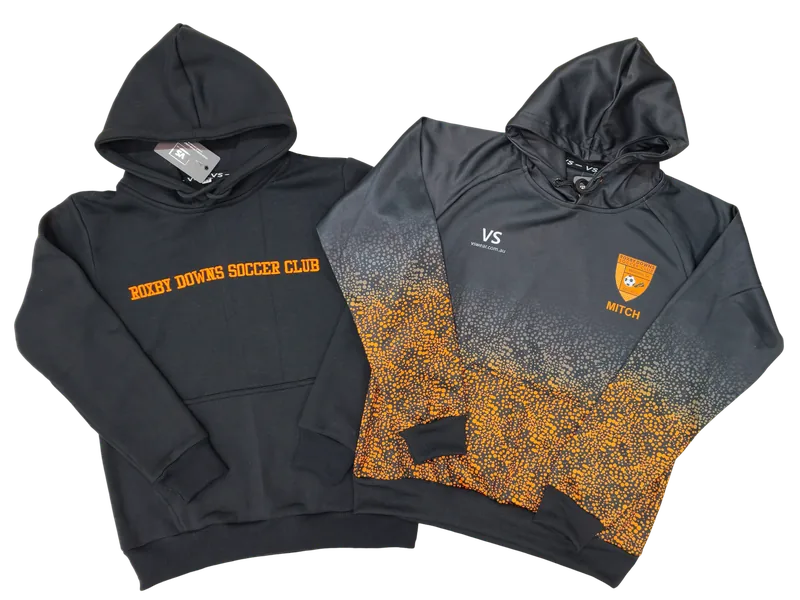
The hardest-working promotional hoodie often is not branded merch at all; it is a local club's gear with your logo on the sleeve. Sponsor a team's hoodies and your brand rides winter-long wear by the exact community you trade in, at a cost that embarrasses equivalent ad spend, wrapped in goodwill no campaign buys. The mechanics are frictionless from the sponsor side: unlimited sponsor placements are included in club orders here, so your funding conversation with the club is clean, and the club merch machinery handles the rest. Businesses running this play across a few local clubs build district-level brand presence for the price of one mediocre trade-show booth.
Event sponsorship works identically through the events page: crew gear and finisher hoodies carrying partner marks, kept for years, photographed endlessly.
Logistics campaign managers actually care about
Deadlines are the promo industry's native anxiety, so the promises here are structural: quote within 2 hours during business hours, proof inside 1 to 2 business days of your order, unlimited revisions until sign-off, then the guaranteed 3 to 4 weeks of production, tracked Australia-wide, with express options for the genuinely urgent, answered honestly before you commit rather than apologetically after. Multi-site distribution can be discussed at order time; brand colour fidelity is locked at proof; and the 100% remake guarantee anchors to the approved file, which for agencies means the client-facing risk sits in writing.
Budget mechanics stay clean for procurement: one all-inclusive per-unit figure, no setup, artwork or digitising fees, no per-placement stacking, bands at 25, 50, 100 and 200 plus. The cost guide translates the model for whoever signs.
Notes for agencies and marketing teams
A few specifics that smooth agency-side ordering. Quotes can be structured for on-forwarding: itemised, all-inclusive, addressed as your client relationship requires, with the remake guarantee stated so risk language survives procurement review. Brand guardianship is native to the process: supplied guidelines govern the proof, colour references lock at approval, and the proof document itself becomes your client sign-off artefact, which shortens the approval chain by exactly one awkward email. Campaign variants, two colourways, a staff-versus-public split, region-tagged runs, ride one base design as separate colourways in a single order, pooled for banding. And the archive works across campaigns: last launch's files feed this launch's variation, so retained clients compound just as club reorders do.
None of this requires an account manager ceremony; it requires sending the brief. The turnarounds above are the turnarounds, campaign season or not.
From campaign brief to worn-for-years
The path compresses to a familiar shape. Send the brand folder and campaign line with a quote request, any file state welcome per the artwork guide; receive the number; order with a 50% deposit; approve the proof your designers and ours converge on; production runs its guaranteed window; gear lands tracked and on-brand. Then the metric that matters starts accruing: months and years of voluntary wear, by recipients who chose to keep your brand in their wardrobe, which is the only promo KPI that was ever worth chasing.
Hundreds of committees, schools and companies have run their gear through this process; the campaigns among them tend to return with the next campaign. 1800 845 056 for the talkers, the form for the briefers, and the bin for the trinkets, where it was always headed.